Songbirds
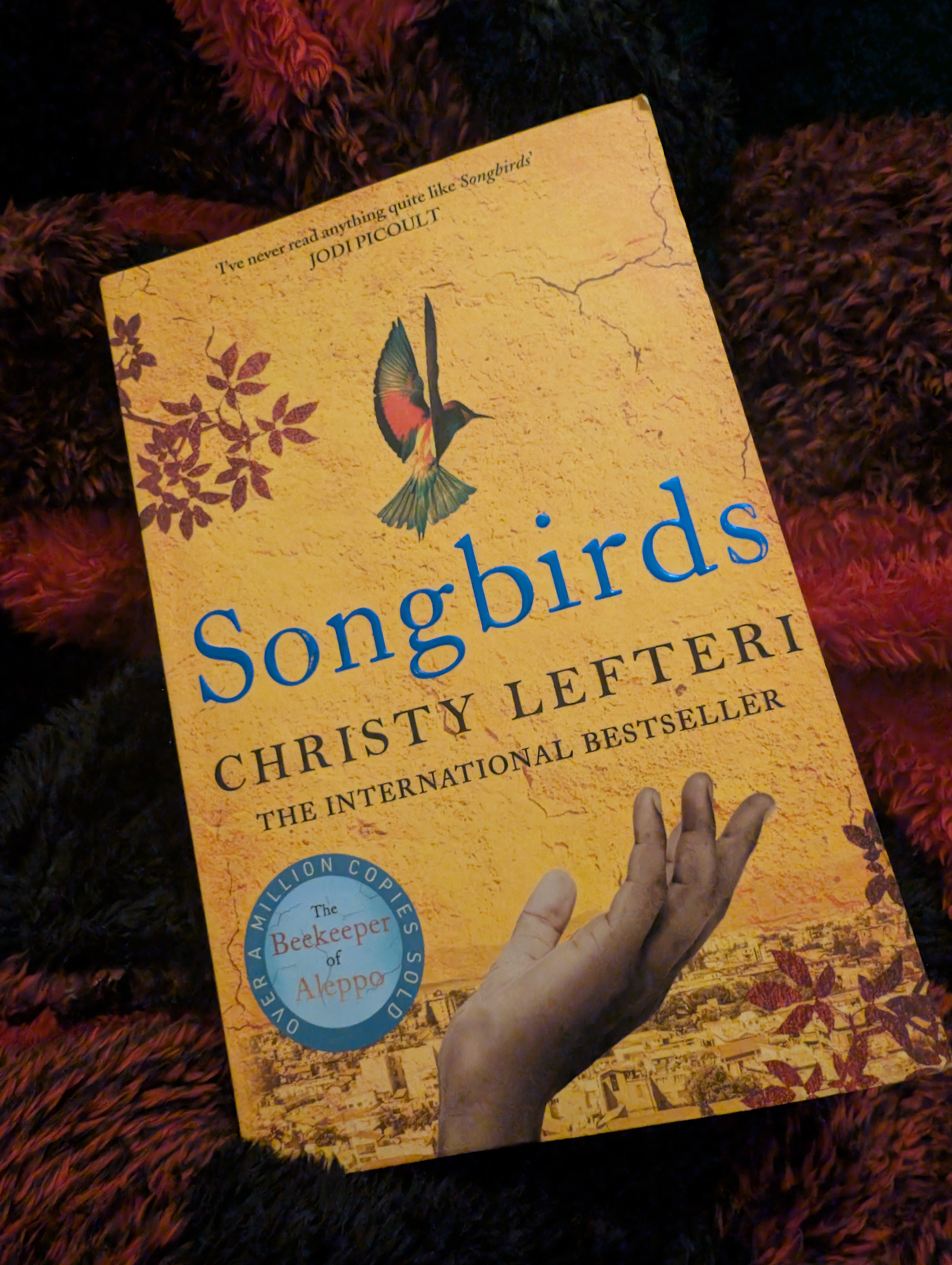

Two years in a row now, my dear sister has gifted me books for Christmas. When I was unwrapping this year’s stack, she told me she had spent quite a bit of time researching them. “They’re really, really good and emotional, you might end up crying,” she said.
That’s a strong review. Wouldn’t you say?
Anyway, just like last year, I began the new year reading one of the books she gave me, Songbirds. I guess, because I was expecting something deeply emotional based on her review, I expected the book to grab me by the throat from the first chapter and throw me into a whirlwind of feelings. But instead, I got something calm and slow-paced.
Most books are written in the voice of the person living the story, but Nisha, the main character's story was told by Petra and Yiannis and we did not hear Nisha speak until the very last chapter, and when she finally did… weren’t her words beautiful?
It’s also worth noting that, unlike many books or TV shows like Law & Order or Criminal Minds, where the focus is on the perpetrator or finding the killer, Christy wrote Songbirds to focus on the victim, to tell her story through the people who knew her, instead of centering the crime itself or the need for resolution. This is quite different for me, and I haven’t read many books like this.
When I started the first chapter, I just kept reading like, okay, okay. Well, if you know me enough, you’ll know I don’t like slow-burn books or movies. I need the chaos/story to start right away.
Then, about 100 pages in, I caught myself thinking, over and over again, where is Nisha? What has happened to her?
Well, I now know what happened to Nisha and what a book this was!
In some way, this story should not be categorized as fiction. Because we have all heard this story before, I mean, there is almost a similar case in real life, and for some of us, we have watched it happen to someone close to us.
Maybe the story also hit especially close to home because I’m an expat living in a different country. Of course, I know my circumstances are different. As some fellow expats like to say, “we are highly skilled migrants (HSM),” unlike the women Christy portrays. But that didn’t dampen the similarities I felt. Whether highly skilled or not, I am still a woman, an African woman. Whatever the label, HSM or not, I’m still a migrant.
…and then you realize that being careful does not save you, coupled with the lackadaisical attitude of the Cypriot police, because, well, “they are foreign workers.” But are they not human? Are domestic workers not people? And do I keep quiet because “I am lucky enough not to have been killed?”
Also, as someone who has lost a good number of loved ones, I know what it means to lose someone and live with an ache that can never be filled. Christy’s description of Nisha’s sadness, of never having asked her husband his favorite color, opened up a part of me that is still not healed and may never be.
After my brother died, I asked myself similar question—questions I never thought to ask before he died. Questions I wished I’d asked but will now spend the rest of my life forming incorrect responses to...
Christy wrote about grief like someone who knows it intimately. I remember pausing while reading, just sitting still, thinking about the stillness of death and the gaping sadness left behind for those who remain.
The book also gave me the space to think about invisible people, the ones who always show up but are never really seen. The seemingly “ordinary” humans working in the background to make life easier for you and me.
The relationship between Petra and Nisha reflected this. Yes, true, Petra paid Nisha for her labor. But it wasn’t until Nisha disappeared that Petra noticed her humanity, that she was a living, breathing woman who left her child behind to care for someone else with so much love.
Nisha gave until there’s nothing left and she had to die to be recognized.
I could go on and on but really, thank you, Christy, for this book. Thank you for the letter to the reader. Your hope was fulfilled. Indeed, there was an echo after the last page, and while I sat still in the silence, Nisha’s voice continued on.
I will end this by sharing the last paragraph she wrote.
“Songbirds is a story about migration and crossing borders: it is about searching for freedom, for a better life, only to find oneself trapped. It is a story about the way in which systemic racism exists, often unquestioned, relying upon prejudice and nationalistic ideals to survive. It is a story about learning to see each and every human being in the same way as we see ourselves.”
Again, what a book!!