Mating in Captivity
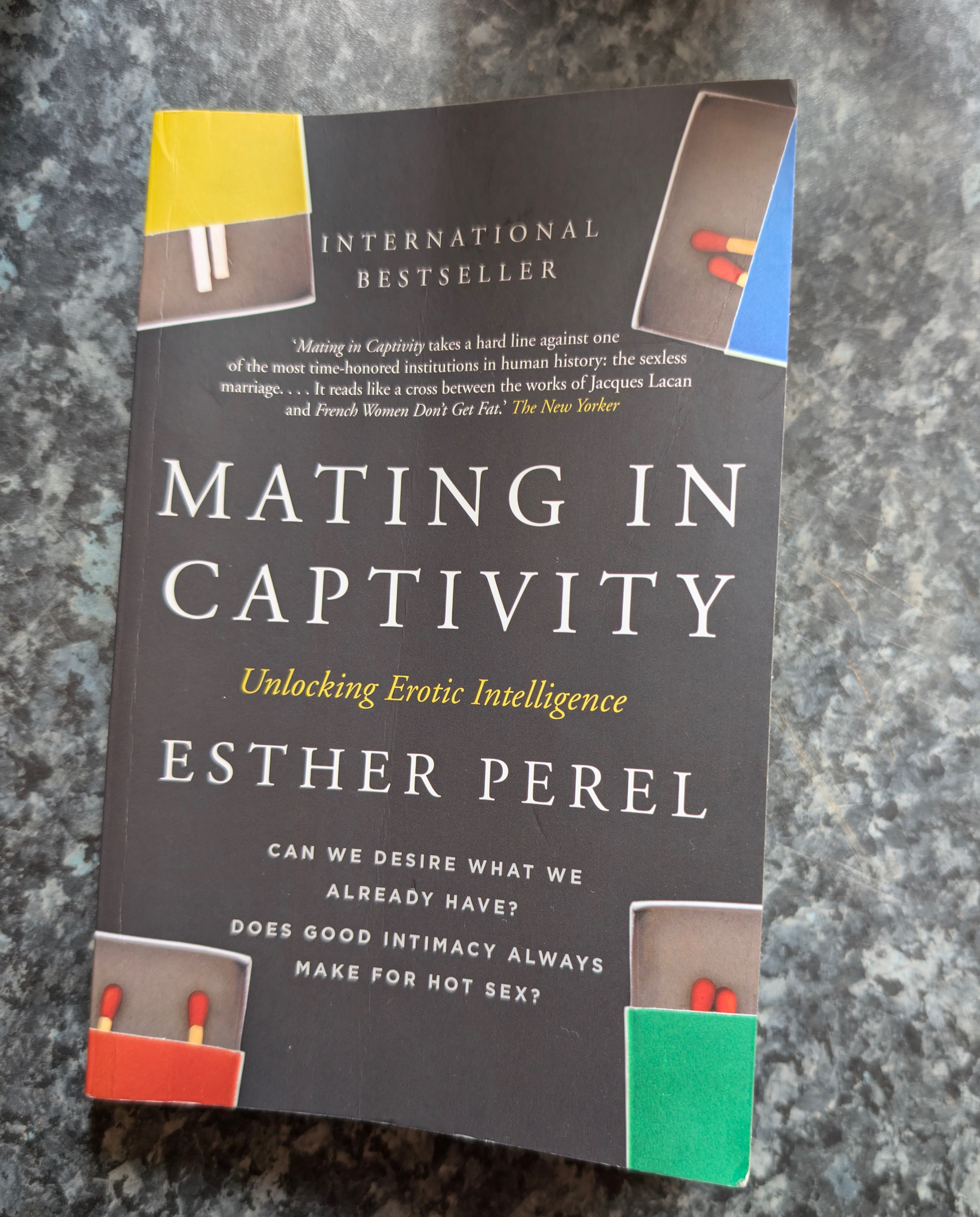

Table of Contents
Yesterday, December 26th, I was visiting my aunt when my cousin asked about the book I was reading. My sister interjected, “You’re too young for that,” and we all laughed. But it reminded me how easily curiosity, especially around sex, is policed. Which, ironically, is exactly why books like this matter.
After finishing Obsession by Debra Webb, I felt oddly energized. I wanted to read more, so off I went, digging through my sister’s book stash.
When I saw Mating in Captivity, I didn’t quite know what I expected. I think I assumed it might explain why pregnancy is sometimes reported during periods of war, famine, or calamity. Yunno, those moments when you’d expect survival instincts to override desire altogether.
However, once I brought the book down from the shelf and checked the cover, I realized… maybe not. Still, I was intrigued.
I read the acknowledgements first because sometimes y̶o̶u̶ I can tell if a book is my vibe from there. Then I moved to the introduction, sat on the sofa, and never put it down.
My take?
Well, Mating in Captivity is unlike most of the books I’ve read recently, but it is easily one of the most rewarding. I’m genuinely glad I read it now and not later.
There is so much to unpack, so much to question, so many uncomfortable truths that the writer, Esther Perel, lays bare. It’s the kind of book I would gift to any friend who gets engaged.
You might ask, why the hell would you give someone this to read?
I haven’t been married, but I’ve been around enough sexual conversations among married friends and through social media to notice a pattern.
Despite the media’s obsession with sex, in the culture I gew up in, conversations about sex within marriage remain deeply uncomfortable and totally non-existent outside marriage. I don’t blame anyone for this. Sex, like most intimate acts, is entangled with cultural and religious ethos that many people are firmly rooted in.
But if you’ve spent enough time on the internet, you’ll know that “dead bedrooms” plague relationships across cultures, continents, and belief systems, and silence has only made this worse…
Well, enough stories. Here are some of the ideas that stuck with me long after I closed the book:
1. Eroticism is not the same thing as sex
Before reading this book, I didn’t realize there’s a distinction between eroticism and sex. It makes sense in contexts like one-night stands or transactional sex, but I had never considered it in committed relationships. Perel made a compelling case for why the presence of sex alone doesn’t guarantee erotic connection.
2. Autonomy within intimacy
As someone who believes autonomy should survive commitment, I appreciate her emphasis on the individual’s sense of self existing beyond the relationship. Before two people can truly become one, each must first know themselves as one.
3. The burden of modern love
I also liked her observation that our generation now approaches marriage as a space for love rather than duty, unlike previous generations. Don’t get me wrong, I have nothing against this new vibe. However, this leads to what I consider one of her most compelling arguments—one I also echo in my essay about making friends as a migrant—that modern relationships place enormous expectations on a single partner to be (best) friend (sometimes only friend), confidant, co-parent, erotic companion and what have you, all at once. It is a responsibility no one person should have to carry.
4. The role of play
In long-term relationships, sex and the relationship itself often becomes serious. You settle into routines, responsibilities, and the roles of partner or parent, forgetting “what” brought you together. Play disrupts that, not play as immaturity, but as curiosity and desire. In other words, don’t lose your child-like wonder.
I could go on and on but truly, there are already countless reviews of this book, so I won’t bore you with more analysis. But I’ll leave you with this from the final chapter:
“At the same time, eroticism in the home requires active engagement and willful intent. It is an ongoing resistance to the message that marriage is serious, more work than play; and that passion is for teenagers and the immature. We must unpack our ambivalence about pleasure, and challenge our pervasive discomfort with sexuality, particularly in the context of family. Complaining of sexual boredom is easy and conventional. Nurturing eroticism in the home is an act of open defiance.”
You should definitely read this book if you plan to get married. Whether you like it or not, sex(presence or absence of it) and eroticism will be an essential part of it.
And you still should, even if you don’t intend to marry or be in a long-term romantic relationship. While Perel doesn’t say this outright, I believe that just as your most meaningful orgasms begin with you, your deepest eroticism does too.
If you don’t truly know yourself—your desires, your fears, your contradictions—no partner can carry that weight for you.
There are so many ideas in this book that push you to question yourself far beyond sex. Questions about identity, freedom, responsibility, and how much of yourself you’re willing to keep alive inside commitment.
Have I recommended this book yet? Or do I need to repeat it?